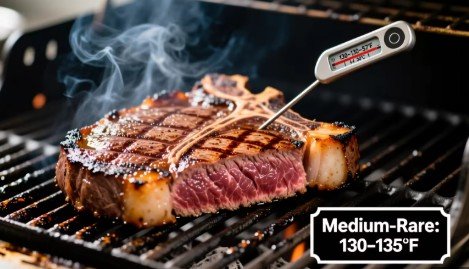
Great barbecue isn’t just about meat choice or seasoning — it’s about cooking in the right temperature zone. Whether you’re smoking low and slow, grilling burgers, roasting whole birds, or searing steaks, each method depends on precise heat control.
And nothing helps you control those heat zones better than a good thermometer.
In this guide, we break down the best temperature ranges for every BBQ style and explain how to measure them correctly using surface, ambient, and internal thermometers.
🔥 Why Temperature Zones Matter More Than Time
Time is just an estimate.
Temperature is the truth.
Every cut of meat cooks differently, and every grill — pellet, charcoal, gas, or smoker — has its own personality. Using the right temperature zone gives you:
-
Consistent results
-
Better flavor and texture
-
The perfect bark, crust, or sear
-
Safer and more predictable cooking
-
Less guesswork
Let’s dive into the four core temperature zones every griller should master.
🌫️ 1. Smoking Zone: 180°F – 275°F
Smoking is the foundation of classic BBQ. It’s slow, gentle, and flavorful.
🔥 Ideal Smoking Range
-
Low Smoke: 180–200°F
-
Best for jerky, cheese (cold smoke), and delicate fish
-
-
Traditional BBQ: 225°F
-
Brisket, pork shoulder, baby back ribs
-
-
Hot & Fast Smoke: 250–275°F
-
Whole chickens, turkey, larger roasts
-
🛠 What Thermometer You Need:
-
Ambient probe to monitor smoker chamber temp
-
Meat probe to track internal temperature
-
Instant-read to confirm final doneness
Pellet grills often swing 15–25°F. A dual-probe thermometer helps you stay in the correct zone the entire cook.
🍔 2. Grilling Zone: 350°F – 450°F
Grilling uses direct, moderately high heat — perfect for everyday cooking.
🔥 Ideal Grilling Range
-
350–400°F:
-
Chicken breasts, vegetables, sausages, bone-in thighs
-
-
400–450°F:
-
Burgers, pork chops, kababs, hot dogs
-
This zone gives food a nice char while keeping it juicy on the inside.
🛠 What Thermometer You Need:
-
Infrared thermometer to check grate surface temps
-
Instant-read thermometer to ensure safe internal temps
Grill surface may hit 500°F even when the hood thermometer shows 400°F — that’s why IR thermometers are important.
🔥 3. Searing Zone: 500°F – 700°F
This is where the magic happens for steak lovers.
Searing requires extremely high heat to create the Maillard reaction — that crispy, flavorful crust everyone loves.
🔥 Ideal Searing Range
-
Steakhouse Sear: 550–700°F
-
Reverse Sear Finish: 500–600°F
-
Cast Iron or Griddle Sear: 450–550°F
If your grill grates don’t reach the right temperature, your steaks will steam instead of sear.
🛠 What Thermometer You Need:
-
Infrared thermometer (most accurate for grate temp)
-
Instant-read thermometer for checking final steak doneness
Reverse-searing on a pellet grill?
Measure the grate temp before finishing — pellet grills often need a sear plate, cast iron, or griddle to hit 550°F+.
🍗 4. Roasting Zone: 300°F – 375°F
Roasting is like using your grill as an outdoor oven.
🔥 Ideal Roasting Range
-
300–325°F:
-
Whole chickens, pork loin, prime rib, ham
-
-
350–375°F:
-
Turkey, whole roasted vegetables, casseroles, baked sides
-
Roasting gives you gentle heat that cooks evenly without drying out.
🛠 What Thermometer You Need:
-
Ambient probe to match oven-like temperatures
-
Meat probe for large roasts
-
Instant-read for perfect finishing accuracy
Roasting benefits the most from consistent ambient heat — pellet grills excel in this zone.
📊 Summary: Recommended Temperature Zones
| Cooking Style | Temperature Zone | Best For | Thermometers Needed |
|---|---|---|---|
| Smoking | 180–275°F | Brisket, ribs, pork shoulder | Meat probe, ambient probe |
| Grilling | 350–450°F | Burgers, chicken, veggies | IR thermometer, instant-read |
| Searing | 500–700°F | Steaks, chops | IR thermometer, instant-read |
| Roasting | 300–375°F | Whole chickens, turkey, roasts | Ambient probe, meat probe |
🧪 How to Measure Each Zone Correctly
✔ For Smoking & Roasting
Place an ambient probe near the meat, not on the side walls.
This gives the true cooking chamber temperature.
✔ For Grilling & Searing
Use an infrared thermometer to scan grate surface temperatures.
This tells you if the grill is hot enough for direct cooking.
✔ For Internal Doneness
Always finish with an instant-read thermometer.
It's the most accurate final step.
🔥 Final Thoughts: Temperature Control = Better BBQ
Every griller knows fire makes flavor —
but temperature makes mastery.
Understanding heat zones gives you:
-
Juicier meat
-
Better crusts and bark
-
More predictable cooks
-
The confidence to cook anything
And with the right thermometer setup, you’ll hit these zones every time.